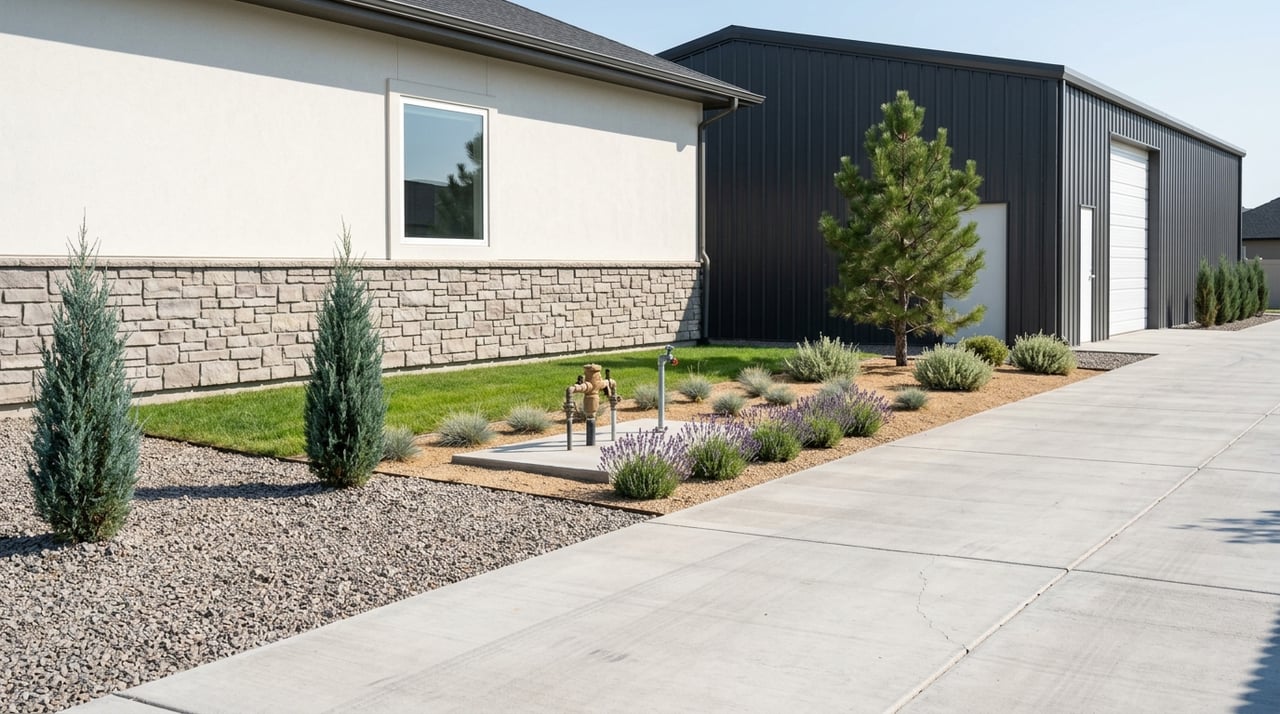
Thinking about selling a home on land near Seven Sisters in Pasco? You are not selling the same product as a standard city-lot home, and that difference can shape everything from pricing to marketing to negotiation. Buyers looking at acreage in the 99301 area often study access, water, septic, boundaries, and outbuildings just as closely as they study the house itself. If you want a smoother sale and fewer surprises, it helps to prepare for those questions before your listing goes live. Let’s dive in.
Why Seven Sisters acreage sells differently
The Seven Sisters area sits in a transition zone between more typical subdivision housing and larger land parcels. Franklin County places Seven Sisters within the Columbia Terrace appraisal neighborhood, described as developed subdivisions north of Burns Road, east of Road 108, and west of Road 84 Place, with 516 platted city lots and about 375 completed homes. That means nearby buyers may compare your property both to newer West Pasco homes and to small-acreage or estate-style properties, depending on the parcel and improvements. Franklin County’s neighborhood description helps explain why pricing can be more nuanced here.
For a seller, that matters because buyers do not always value acreage by adding a flat amount per acre. A home on land may appeal to a different buyer than a home on a standard lot, and those buyers usually look beyond square footage. They want to know how usable the land is, how the property is served, and whether the improvements are documented.
Start with the right pricing strategy
Pasco’s broader market gives you a helpful baseline, but it is only the starting point. Redfin’s Pasco market data shows a February 2026 median sale price of $422,365, with a median 75 days on market and an average sale-to-list ratio of 98.7%. In plain terms, homes are still selling, but buyers have room to negotiate and many sales are not happening instantly.
In the Seven Sisters area, Franklin County’s sales sample for nearby subdivision homes ranges from about $400,000 to $684,000 for homes roughly 1,490 to 3,261 square feet. That gives you context for the house itself, but acreage properties need a separate land-value analysis. The home may be compared to subdivision homes, while the land is judged by access, utilities, irrigation, site condition, and legal use.
Land value is not just about size
Franklin County notes that not all lots are buildable, easements may affect the land, fences may not mark the true property line, and only a survey can reliably confirm boundaries. The county also notes that water rights sold with land may not automatically allow every intended use without coordination with the proper agencies or water district. You can review that guidance on the county’s property information page.
Recent public Pasco examples show how wide the pricing range can be. Sales have included a 5-acre residential parcel at $125,000 in 2022 with no irrigation water rights, a 0.83-acre irrigated residential-acreage parcel at $235,000 in 2022, a 0.46-acre irrigated lot at $175,000 in 2025, and a 1.1-acre vacant parcel at $250,000 in 2025. Those examples suggest buyers may pay more attention to usability and water access than to acreage count alone.
What buyers want to verify first
Acreage buyers tend to approach a listing with a due-diligence mindset. They are often less focused on cosmetic details at first and more focused on whether the property works the way they expect. If you can answer those questions early, your listing often feels more credible and easier to pursue.
Access and road details
Access is one of the first items buyers examine. Franklin County explains that many rural properties use private access roads, some county roads are designated as summer roads and are not maintained year-round, and unpaved roads can be muddy, dusty, and expensive to maintain. The county also requires a road approach permit for a dwelling or certain accessory structures.
Before listing, it helps to gather clear information on:
- Legal access to the parcel
- Road type and surface condition
- Driveway width and turnaround space
- Gate access and entry condition
- Any known easements or rights-of-way
If your property shows well from the road and access is easy to understand, buyers often feel more confident scheduling a showing and moving forward.
Water, irrigation, and source details
Water is a major value driver in this part of Pasco. The City of Pasco says its public irrigation utility is separate from drinking water, serves about 9,000 homes, typically runs from April through October, and the connection transfers with the property when service is already in place. You can reference the city’s irrigation utility information for those details.
That said, acreage buyers want specifics, not general statements. Your marketing should clearly state whether the property has city irrigation, a private well, a shared well, or irrigation-water-right acres. If the source is not explained clearly, buyers may assume risk and adjust their offer accordingly.
Septic and well records
If your property uses septic, buyers will usually ask for documentation early. The Benton-Franklin Health District oversees permitting, design oversight, and inspection of many on-site septic systems in the area, and the Washington Department of Health notes that failing systems can reduce property value and create legal liability. The local starting point for records is the Benton-Franklin Health District on-site sewage program.
Try to collect these items before listing:
- Septic permit records
- Pumping and service history
- Approximate system age
- Drainfield location
- Any available well documents or water testing history
Having these details ready can reduce delays once a buyer starts inspections.
Shops, barns, and outbuildings
Outbuildings can add real appeal, but only if buyers feel confident they were placed and permitted correctly. Franklin County’s detached accessory structure packet for buildings over 200 square feet requires a site plan showing items such as septic components, wells or water meters, easements, driveways, setbacks, and nearby structures. The county packet is available here.
If your property includes a shop, barn, or other detached structure, buyers may ask:
- Was it permitted?
- Is it correctly sited on the parcel?
- Does it affect setbacks or septic areas?
- Is access to the structure adequate?
The more complete your documentation, the easier it is for a buyer to see the structure as an asset rather than a question mark.
Boundaries, surveys, and setbacks
Boundary issues can become a sticking point fast on acreage sales. Franklin County states that fences may not be on the true line and only a survey confirms property lines. The county also notes that wetlands, streams, shoreline areas, canals, or drainage features may create setbacks or regulated areas on some properties.
If your land is near canals, ditches, marshy ground, or shoreline-adjacent areas, it is smart to be ready for extra buyer questions. A recent survey or other clear boundary documentation can help keep negotiations focused and prevent last-minute uncertainty.
How to market land plus improvements
Acreage properties should be presented differently from a typical suburban listing. Buyers need to understand not just the home, but how the full property functions. That means your listing photography and description should show the relationship between the house, land, access, and utility features.
The most useful visuals often include:
- The driveway entrance and gate
- Road surface and approach
- Irrigation hardware or water access points
- Shops, barns, or other detached structures
- Open usable ground
- Garden, pasture, or orchard areas
- View corridors and general site layout
This type of marketing helps buyers connect the dots before they visit. It also reduces confusion about what makes the property different from nearby subdivision homes.
Timing can affect presentation
In Pasco’s dry climate, seasonality matters. NOAA’s 1991-2020 normals for Pasco Tri-Cities Airport show annual precipitation of 7.62 inches, with July mean precipitation at just 0.15 inches and summer average highs in the low 90s. Combined with Pasco’s irrigation season that typically runs from April through October, that means irrigated ground, lawns, and landscaping often show best when they are green and active.
If your property has irrigated landscaping or land that benefits from a greener presentation, listing timing can influence first impressions. This does not mean you cannot sell in another season, but it does mean presentation should match the property’s strongest features.
Expect negotiations beyond price
In acreage sales, negotiation often centers on due diligence more than on headline price. With Pasco homes averaging about 75 days on market and selling around 1% below list price, buyers may come in prepared to ask for repairs, records, inspections, or credits. On land-oriented properties, those conversations often focus on access, water, septic, boundaries, and permitting.
That is why preparation matters so much. When you can provide clean information up front, you reduce uncertainty and strengthen your position. Buyers are usually more comfortable making a solid offer when they do not have to guess about basic property facts.
A practical seller checklist
Before you list a home on land around Seven Sisters Pasco, try to have these items organized:
- A clear pricing strategy that separates home value from land value
- Notes on legal access, road type, and driveway condition
- Water source details, including irrigation information if applicable
- Septic records and maintenance history
- Well documents or water test records, if applicable
- Permit information for shops, barns, or other major structures
- Survey or boundary documentation, if available
- A marketing plan that highlights land use and improvements, not just interior photos
This kind of preparation helps your property stand out for the right reasons.
Selling acreage or a home on land takes a little more strategy, but it can also create a strong opportunity when the property is priced well, documented clearly, and marketed with purpose. If you want experienced local guidance on positioning a Seven Sisters or West Pasco acreage property for today’s market, connect with Laura & Wes Hodges for a personalized plan.
FAQs
What makes selling a home on land in Seven Sisters Pasco different from selling a subdivision home?
- Buyers usually evaluate the house and the land separately, with close attention to access, water, septic, boundaries, easements, and outbuildings.
How should you price acreage property in West Pasco?
- You should use nearby home sales for house value context, then separately analyze land factors like irrigation, utility access, usability, and legal limitations.
What water information do buyers need for Pasco acreage listings?
- Buyers usually want to know whether the property has city irrigation, a private well, a shared well, or irrigation-water rights, along with any documents that support that information.
What septic records should sellers gather before listing a Franklin County property?
- It helps to have septic permit records, pumping history, system age, drainfield location, and any related well or water-testing documents.
Why do surveys matter when selling land around Seven Sisters Pasco?
- Franklin County notes that fences may not mark the true property line, so a survey can help confirm boundaries and reduce negotiation problems over easements or setbacks.